


Guide Sensmart PC210 Thermal Imaging Camera
Delivering Outside Australia or New Zealand? Delivery is free. Import duty, customs charges and any tax on arrival are set by your country and are payable by you — we can’t collect them for you.
Tracking
Tracking
Keep an Eye on your Gear
Simply enter the tracking number sent to your email to see exactly where your package is and when it is estimated to arrive.
Note: It may take 24-48 hours for tracking information to update after your order has been dispatched.

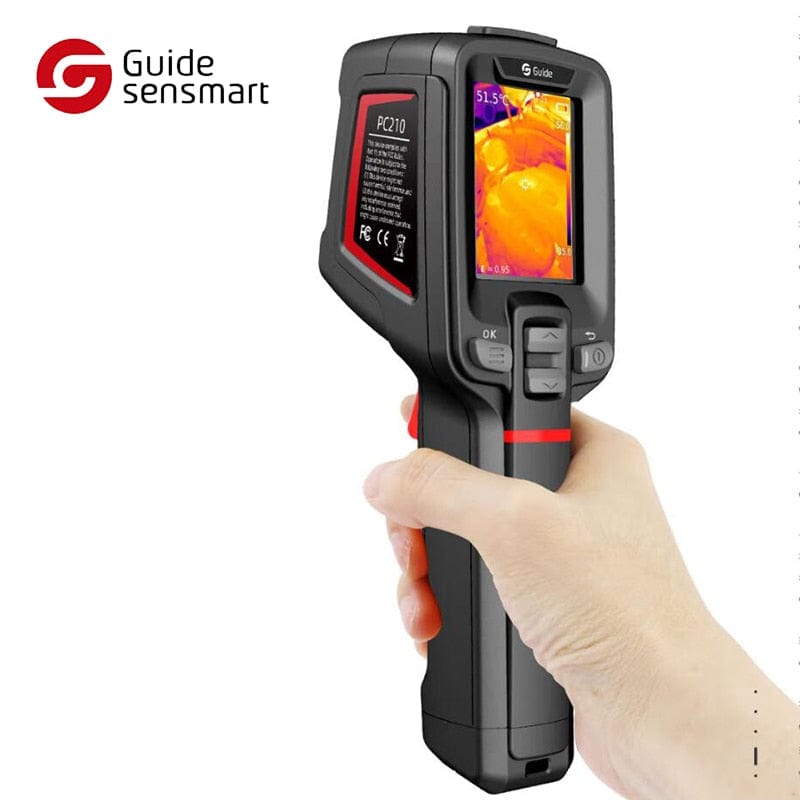
Guide Sensmart PC210 Thermal Imaging Camera

The Fault is Hot Long Before it Fails.
A loose termination in a switchboard runs warm for weeks before it lets go. A bearing drags long before it starts screaming. A slab leak soaks the floor days before a stain shows on it. None of that is visible, so it gets found the expensive way — a call-out at midnight, a machine down mid-shift, or a floor cut open on a guess.
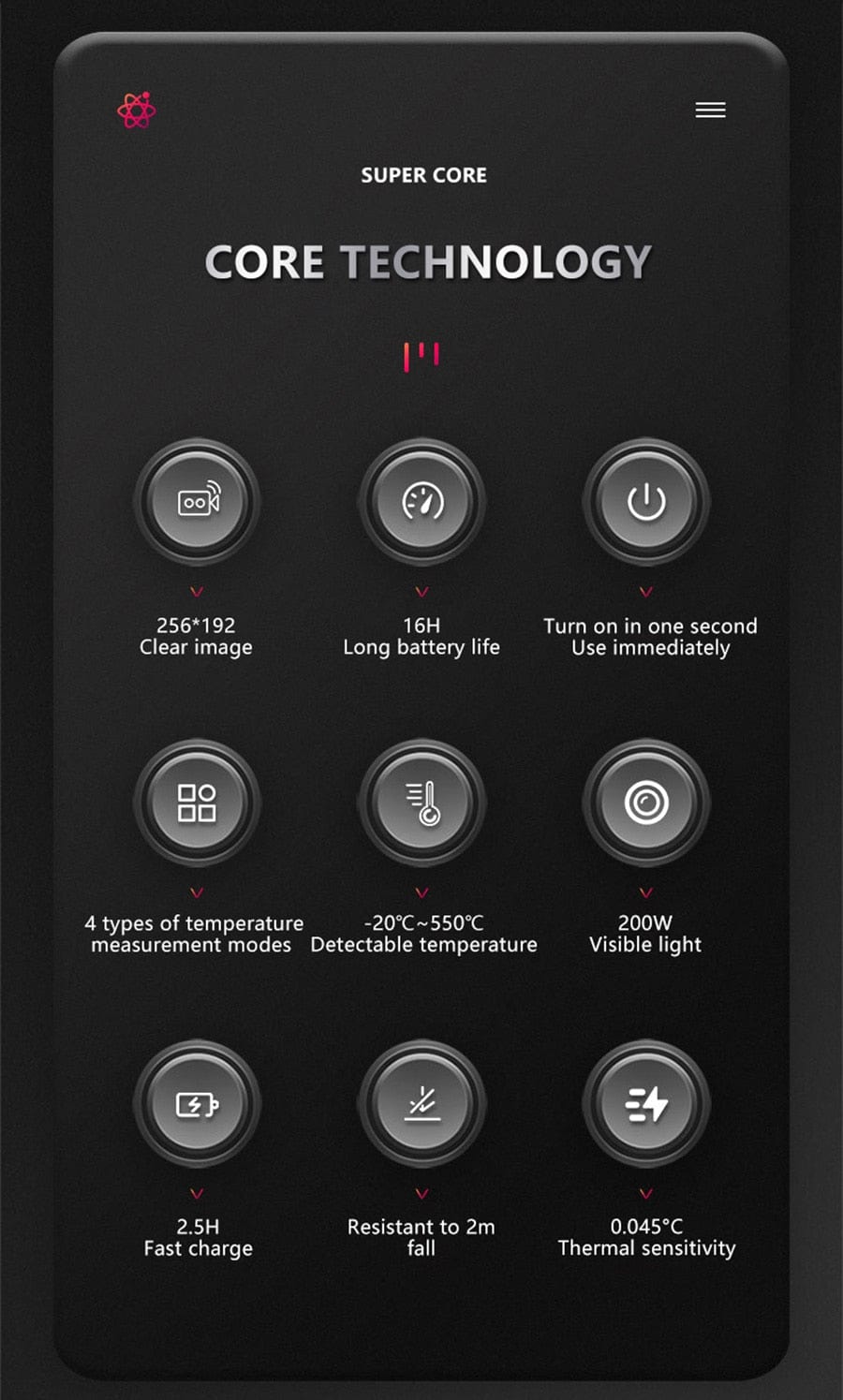
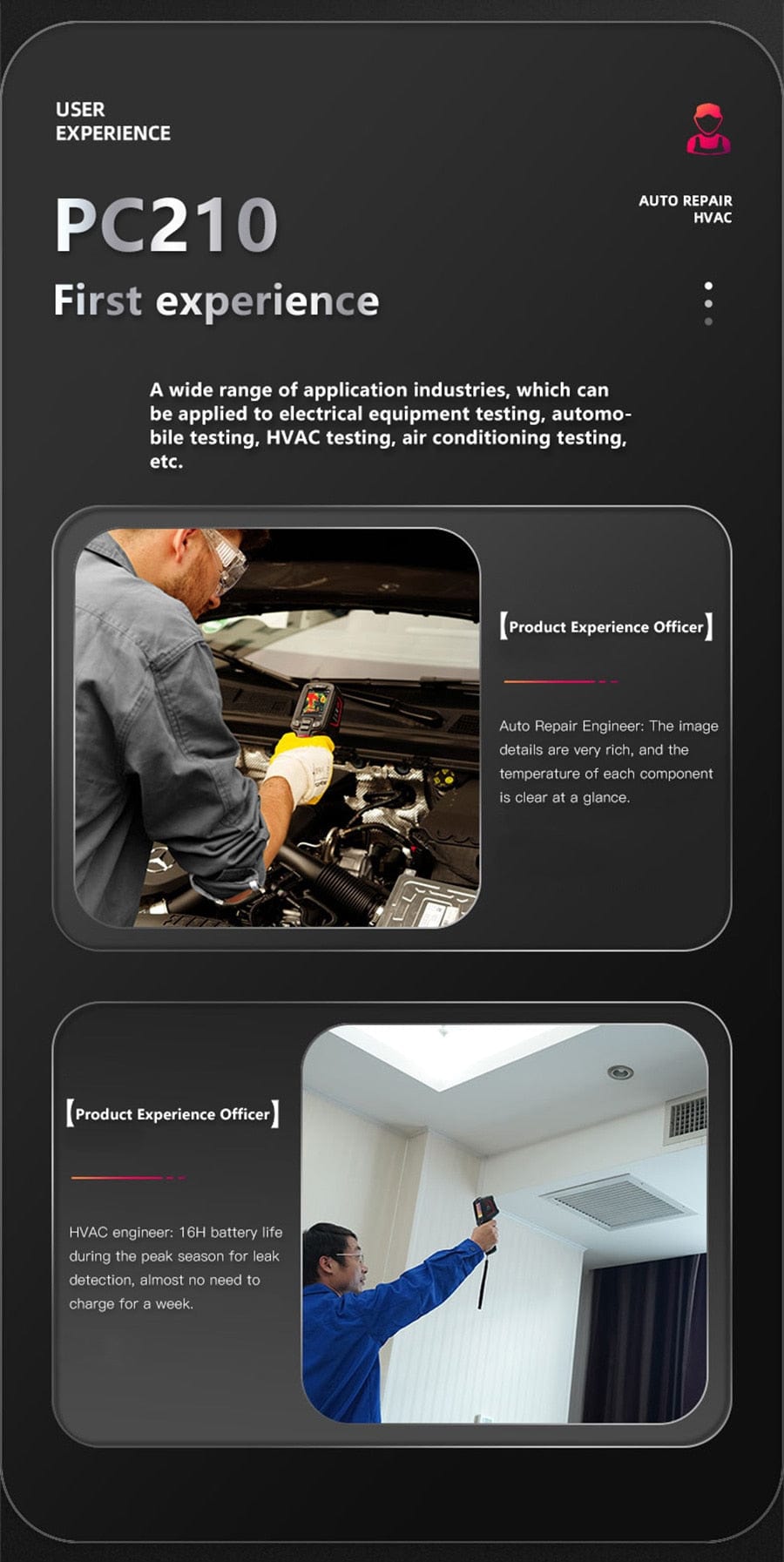
Thermal makes it visible. Point the PC210 at a board, a bearing housing, a roof cavity or a wall and the heat pattern is on the screen about a second after you hit the button, with the hottest and coldest points in the frame labelled in degrees. Pull the trigger and it saves a JPG with the temperature data inside it, so the job gets a photograph instead of an opinion.
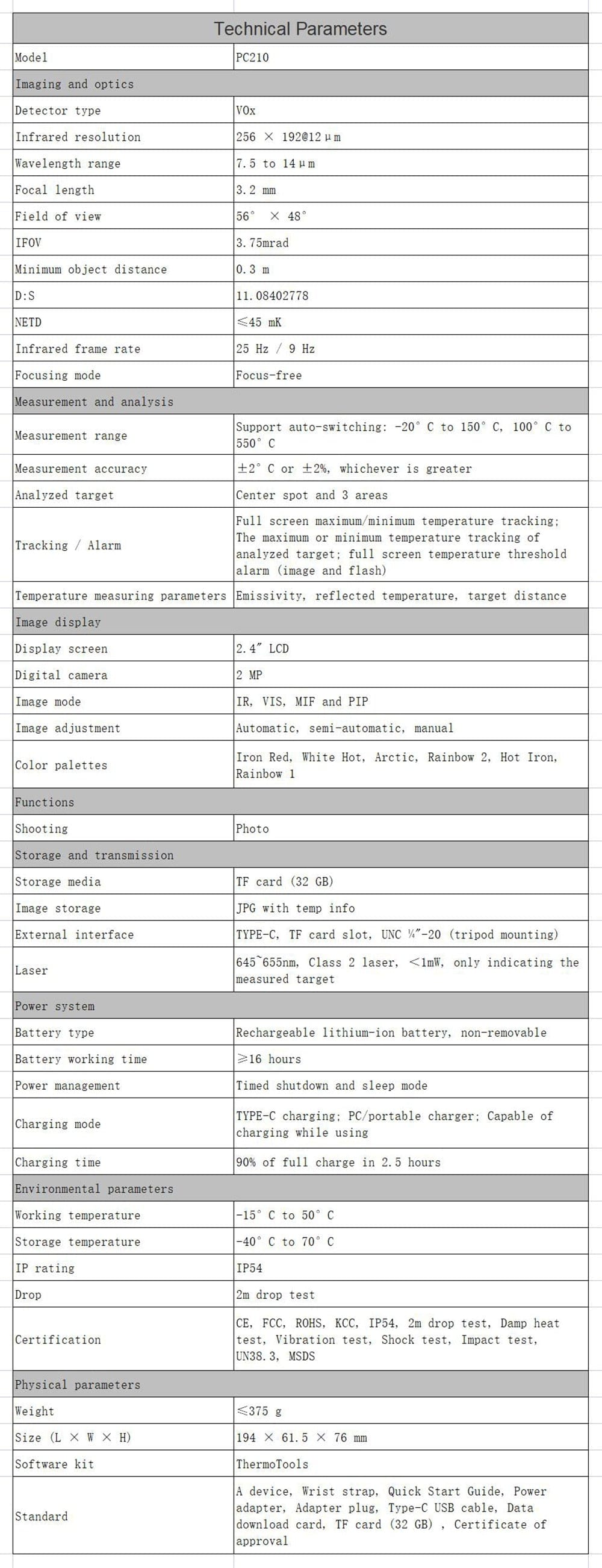
The detector is 256 x 192 — that is the real sensor, not an upscaled picture — reading from -20 °C to 550 °C at ±2 °C or ±2%, whichever is greater. That makes it a fault-finding tool. It is not a calibrated instrument and it is not a medical device, and the Limits tab spells out both.
What it Does
- Finds Hot Joints: a warm termination, an overloaded circuit or a tired breaker shows as a bright spot in a board long before anything trips.
- Traces What is Under the Floor: underfloor heating loops, hot water runs and leaks usually warm or cool the surface above them, and that pattern is what you are looking at.
- Checks Bearings & Drivelines: compare one bearing housing against the identical one beside it and a dragging bearing gives itself away as a temperature difference.
- Reads Insulation & Draughts: missing batts, a gap around a door and a leaking duct all show up as a cold or hot patch across an otherwise even wall.
- Goes Over an Off-Grid Setup: a hot cell in a battery bank, a warm busbar or a lazy panel in an array stands out against the ones either side of it.
- Documents the Fault: every capture is a JPG with the temperature data embedded, so it drops straight into a report on the laptop.
Key Features
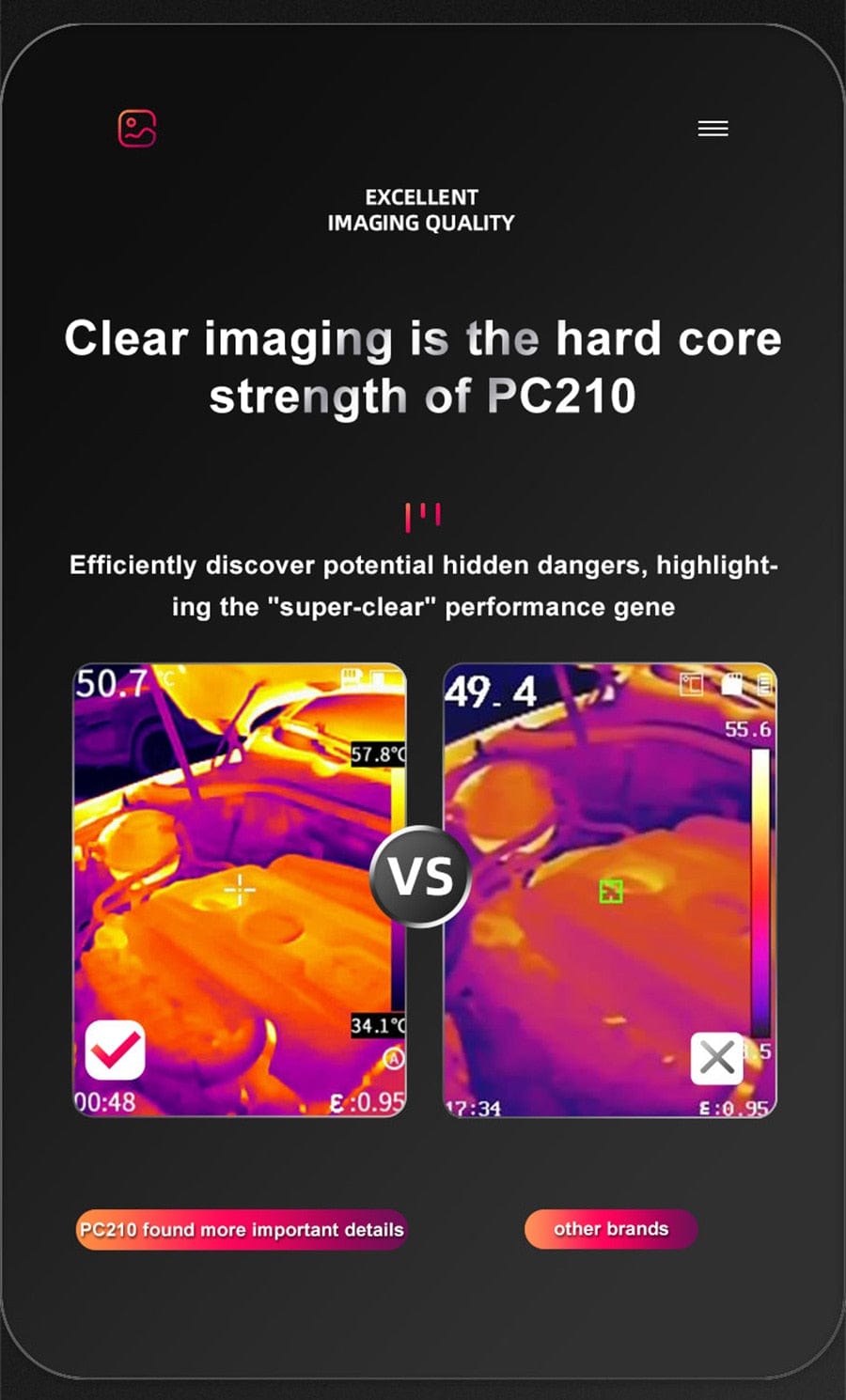
- Native 256 x 192 Detector: a VOx uncooled sensor on a 12 µm pixel pitch — 49,152 temperature points in every frame.
- 45 mK Sensitivity: it separates a 0.045 °C difference, which is what lets a slightly warm lug stand out from the copper around it.
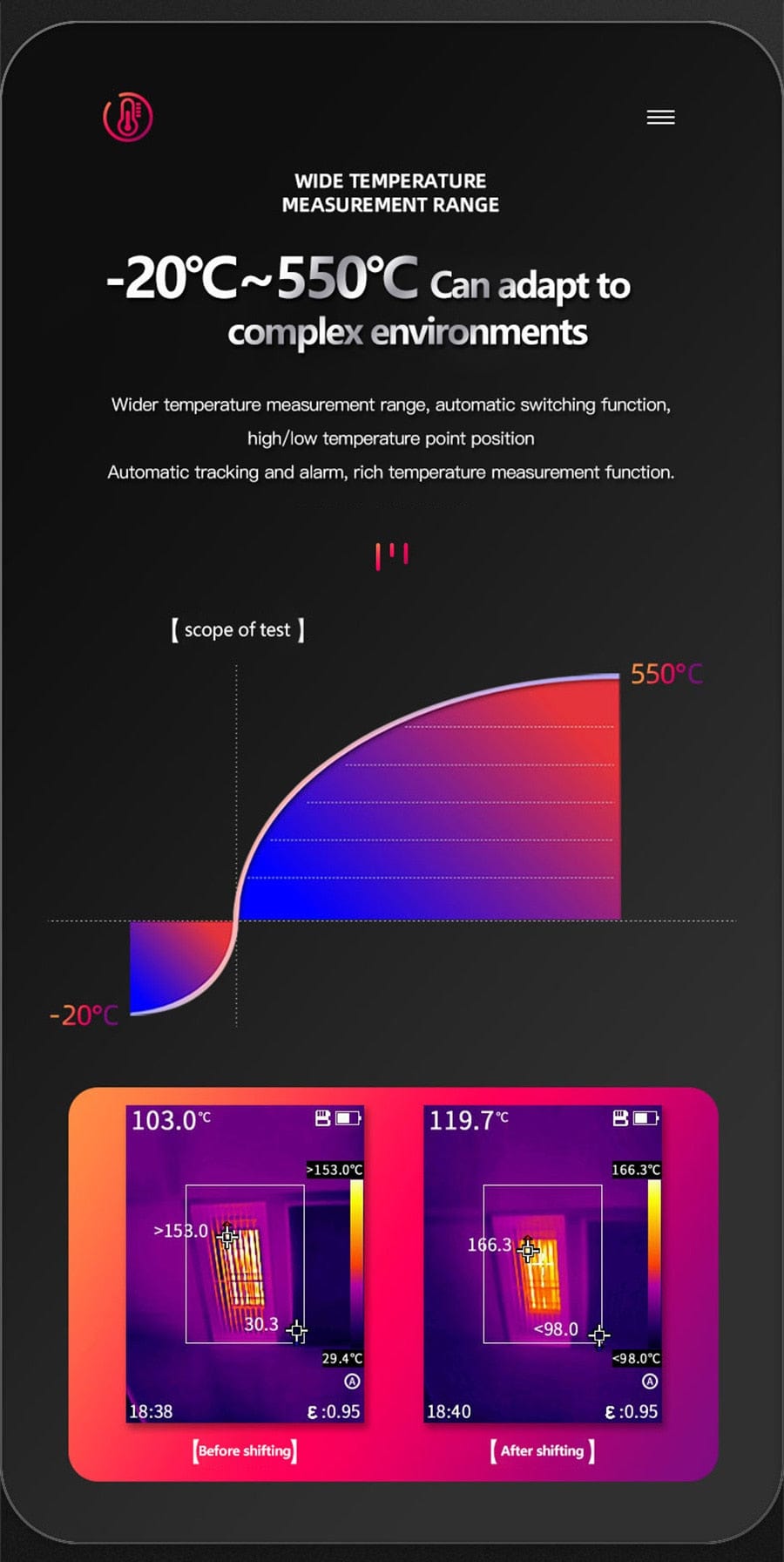
- Two Measuring Bands: -20 °C to 150 °C and 100 °C to 550 °C, switching over automatically as the target gets hotter.
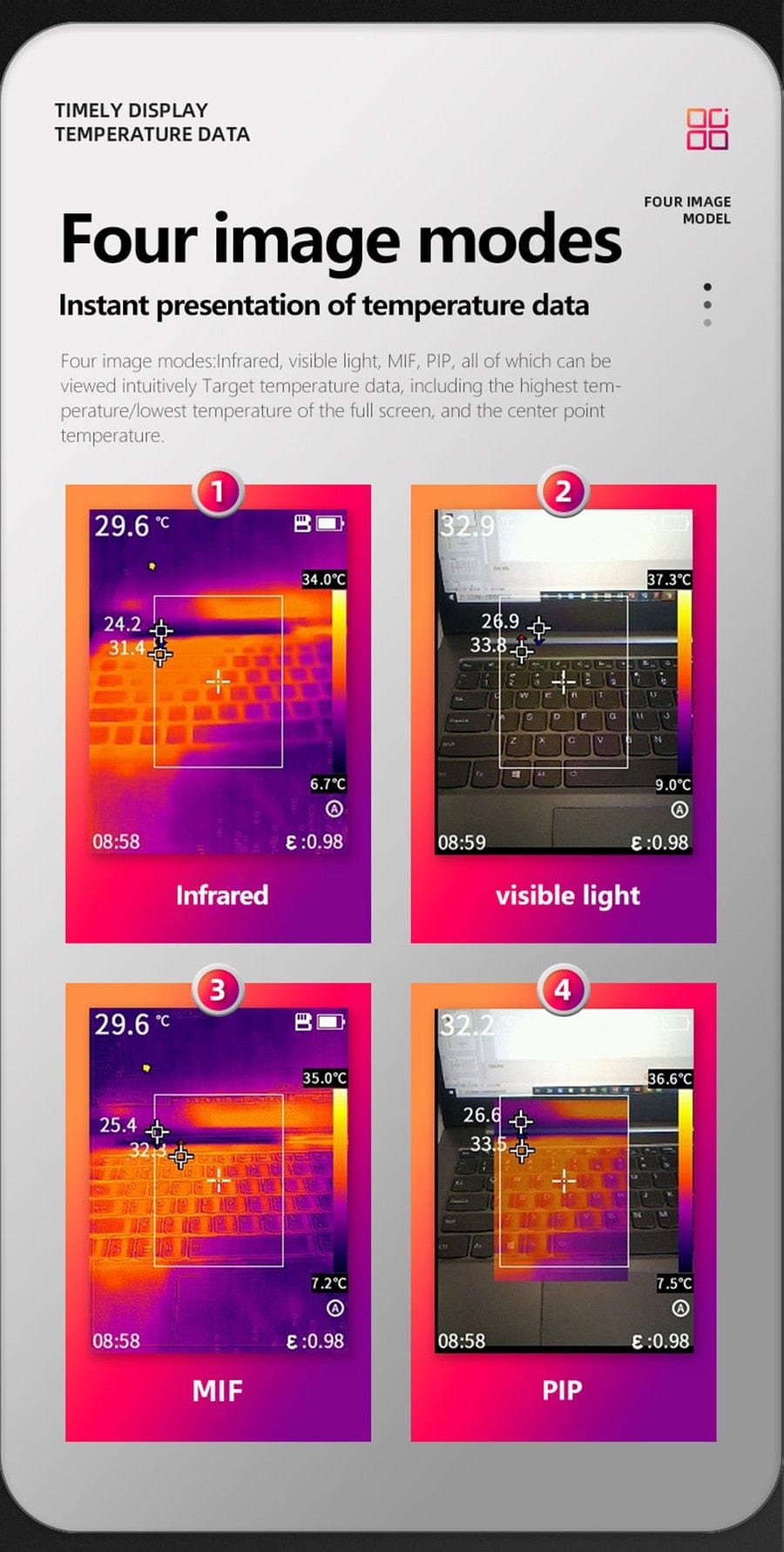
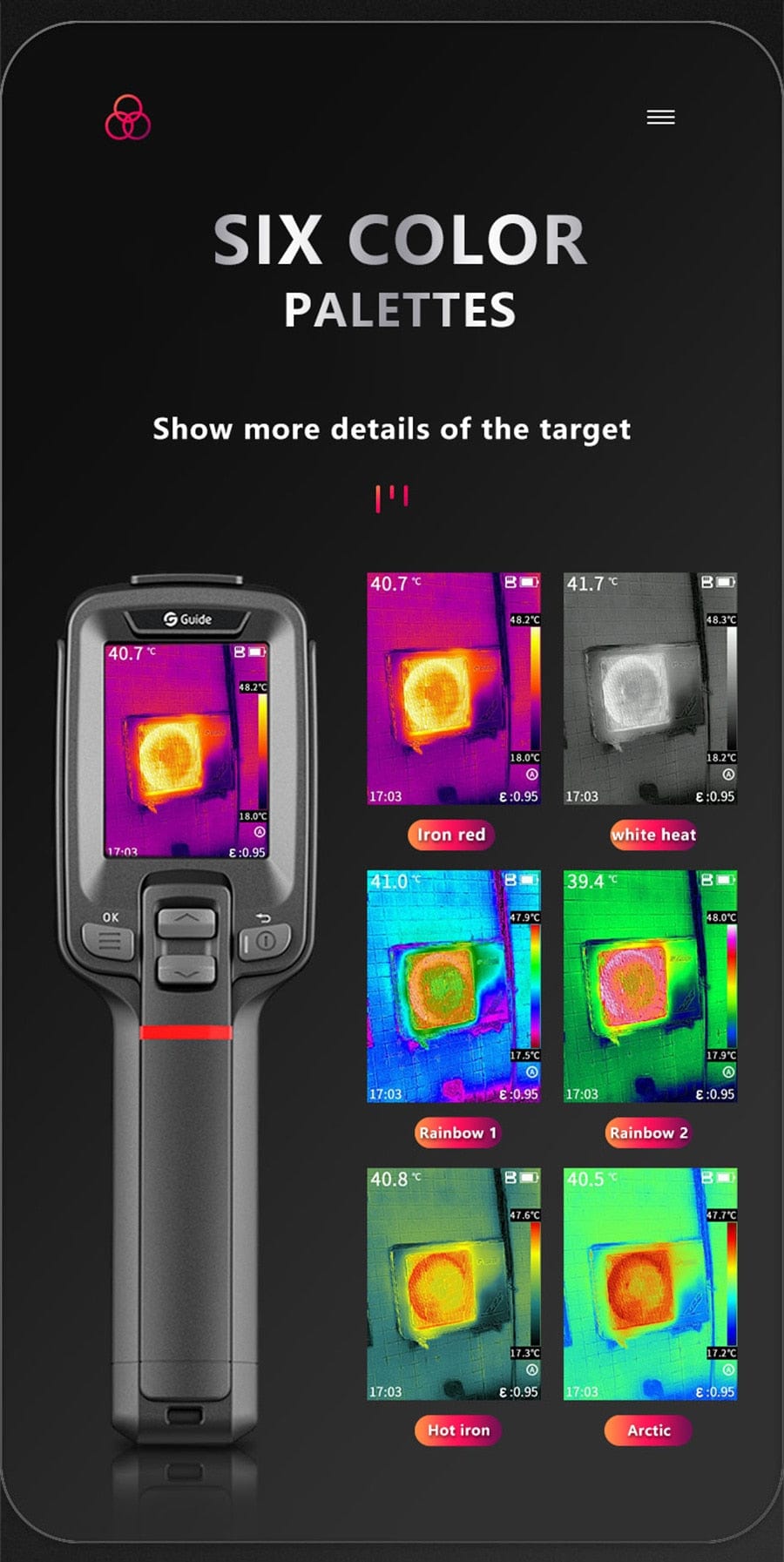
- Four Image Modes: infrared, visible light, MIF blend and picture-in-picture, with six colour palettes to pick from.
- On-Screen Analysis: centre spot plus three areas, full-screen hot and cold point tracking, and a high or low threshold alarm.
- Set your Own Variables: emissivity, reflected temperature and target distance are all adjustable, which is what keeps the reading honest.
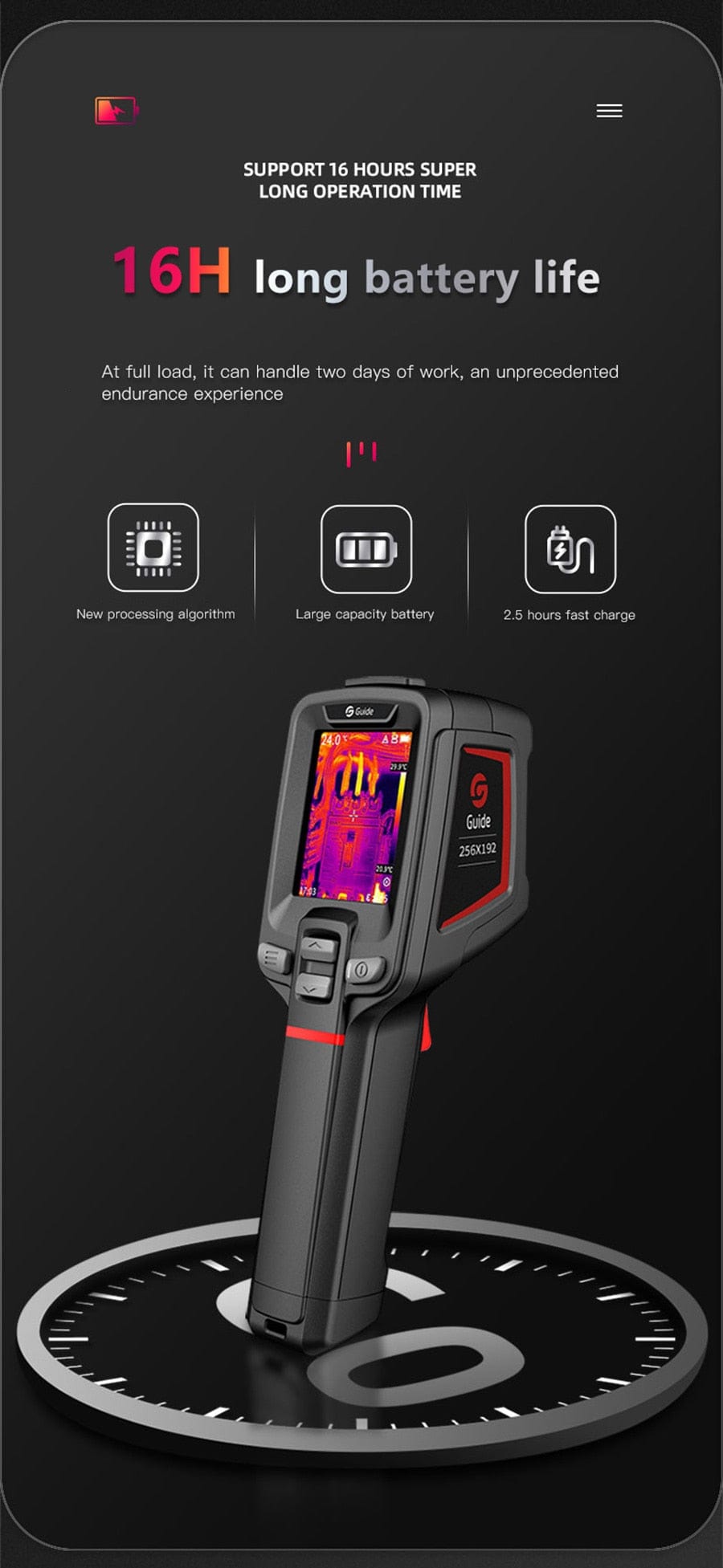
- Sixteen Hours a Charge: Type-C charging to 90% in 2.5 hours, and it keeps working while it is sitting on the cable.
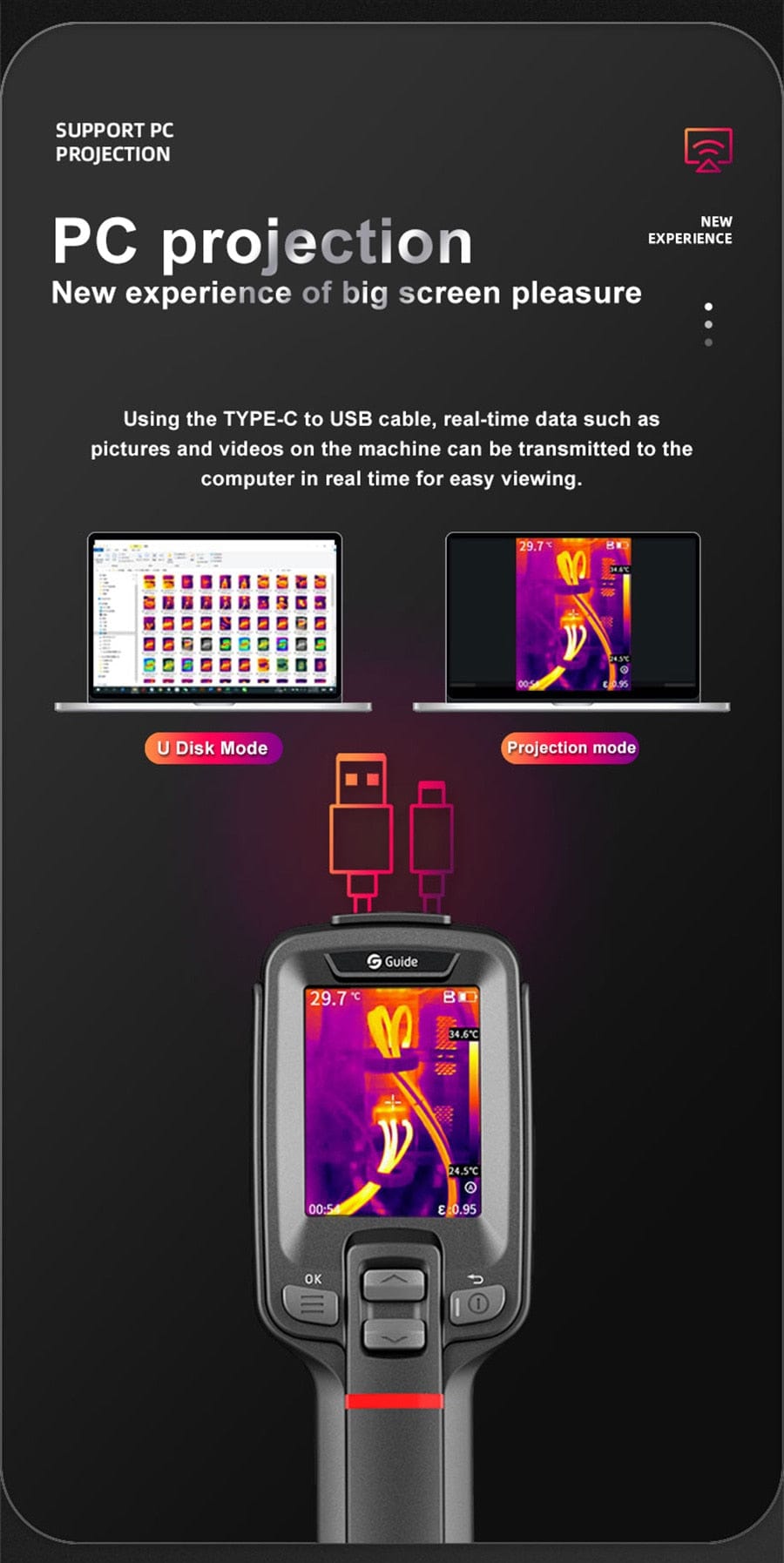
- Live Onto a Laptop: the Type-C to USB lead runs it as a drive or throws the live image onto a PC screen through the ThermoTools software.
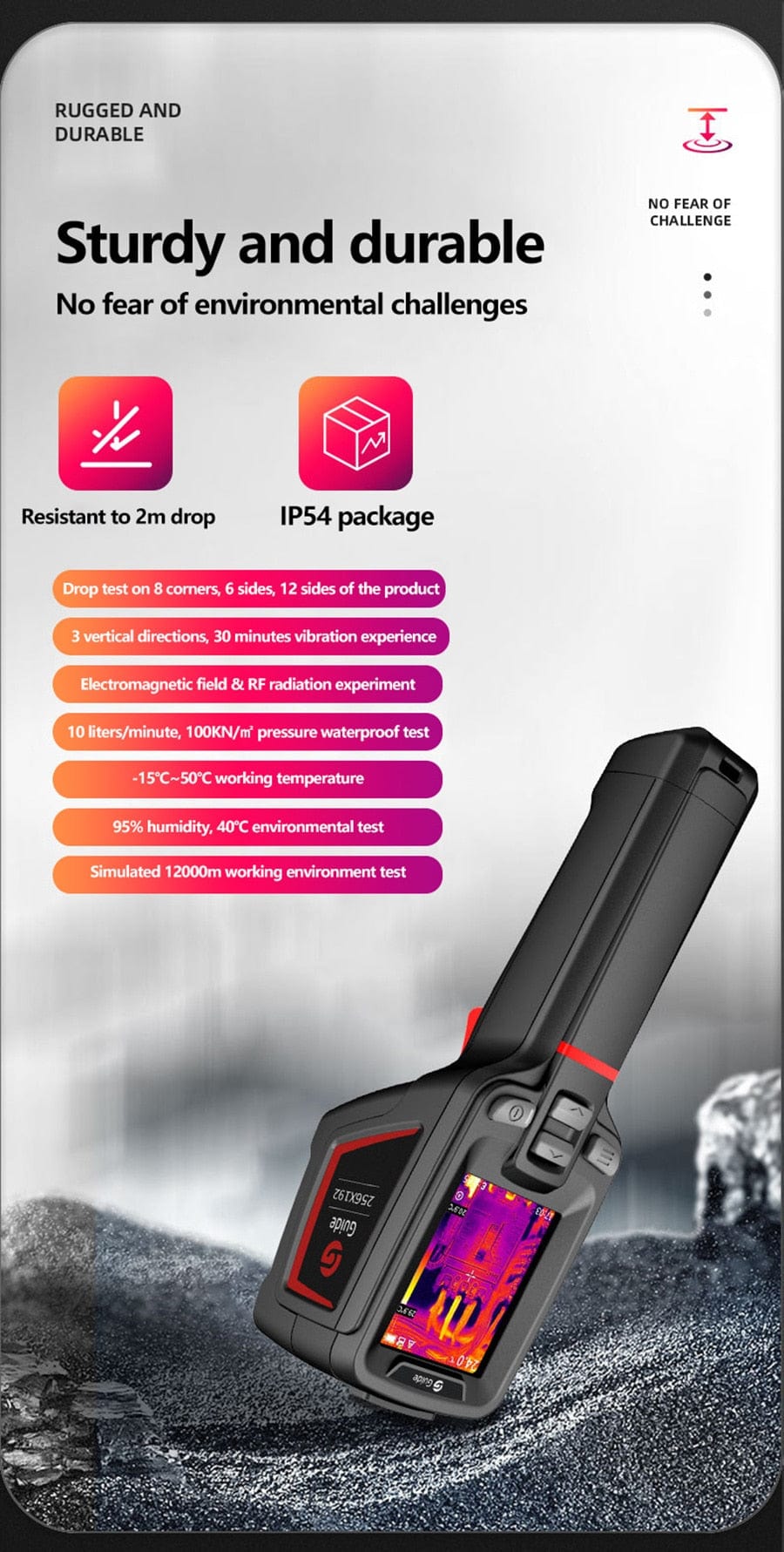
- Sized for a Tool Bag: 375 g, 194 x 61.5 x 76 mm, IP54, and a UNC 1/4-20 thread underneath for a tripod.
- Laser & Work Light: a Class 2 laser marks the spot being measured and there is a light beside the lens for dark cavities.
Limits
- It Sees Surfaces, Not Through them: thermal reads the outside skin of whatever you point it at. It finds a pipe, a stud or a leak by the warm or cool patch left on the surface — it does not look through a wall, and glass and water are opaque to it.
- Not a Calibrated Instrument: the stated accuracy is ±2 °C or ±2%, whichever is greater. No calibration certificate ships with it and none has been sighted. If a compliance report needs traceable numbers, this is not the device for it.
- Not a Medical Device: it will not screen anyone for fever and it must not be used to take a person's temperature. The accuracy figure alone rules that out, and nothing on this page should be read as suggesting otherwise.
- IP54 is Not Waterproof: dust protected and splash resistant. Do not hose it, do not put it under water, and dry it off before it goes back in the bag.
- The Laser is a Class 2 Laser: the red dot is a target pointer, nothing more. Never aim it at anyone's eyes or at a shiny surface sitting at eye height.
- Shiny Metal Reads Wrong: bare aluminium, polished steel and glass reflect infrared and will hand you a nonsense number. Set the emissivity for the material, or stick a strip of matt tape on the surface and read that instead.
- Stills Only: it captures photographs, not video. It will send a live image to a PC over Type-C, but it does not record clips to the card.
- A Small Detector is a Small Detector: at 3.75 mrad each pixel covers roughly 19 mm at 5 m. Up close it is detailed; from the other side of a yard a warm joint is a couple of pixels and no more.
- No Certificate Has Been Sighted: CE, FCC and WEEE marks are moulded into the housing and the supplier's own parameter panel also lists RoHS and KCC. None of those is an Australian approval, no RCM mark is shown anywhere on the unit, and BushLine has not sighted a certificate behind any of them.
- Nothing Here to Claim on: the factory warranty sits with BushLine and is not transferable, so it is worth nothing to a buyer. Returns are faulty or not-as-described only.
Q & A
Is 256 x 192 the Real Sensor, or an Upscaled Picture?
It is the detector itself. The supplier's parameter panel states 256 x 192 on a 12 µm pixel pitch VOx sensor, and its own artwork counts 49,152 temperature points in a frame — which is exactly 256 multiplied by 192. Nothing on this camera is interpolated up from something smaller, and if you see a thermal camera advertised at a far bigger number for a lot less money, that is usually the difference.
Will it See Through a Wall?
No, and neither will anything else at any price. It reads surface temperature. A hot water pipe, an underfloor loop or a leak normally warms or cools the surface above it, and that is the pattern you are reading. Glass, water and polished metal will reflect rather than show you what is behind them.
Can I Check Someone's Temperature with it?
No. It is an inspection tool for buildings, plant and electrical work. It will not screen anyone for fever and it must not be used to take a person's temperature. The stated accuracy of ±2 °C or ±2% is far coarser than any decision about a person's health could stand.
How Close do I Need to Get?
Minimum object distance is 0.3 m and the lens is focus-free, so there is nothing to adjust. Field of view is 56° x 48° and spatial resolution is 3.75 mrad, which works out at roughly 19 mm per pixel at 5 m. Close in on small joints, stand back for a whole board.
Does it Record Video, and What Card does it Take?
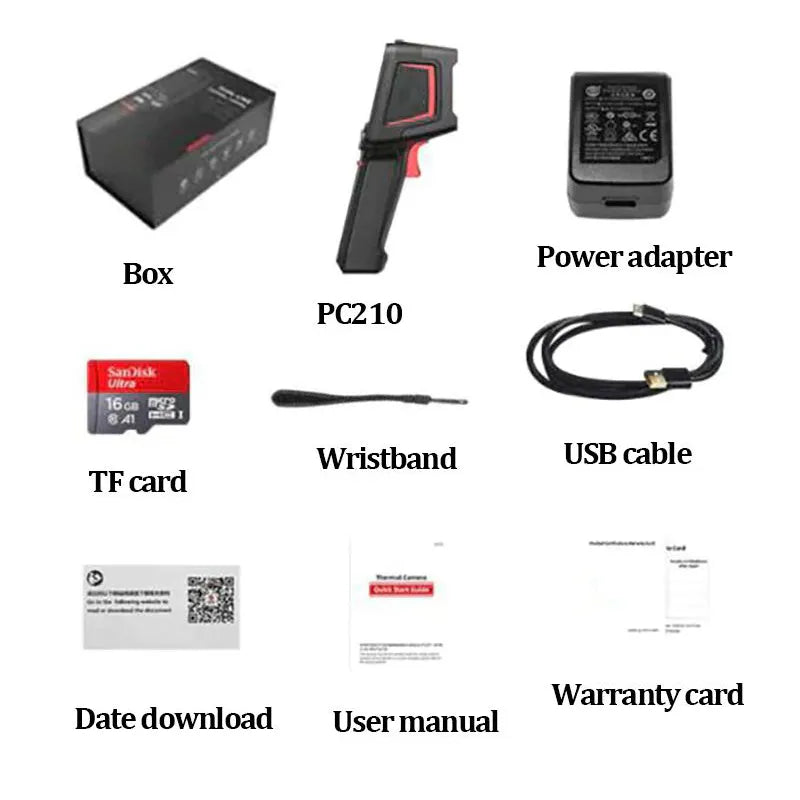
Stills only, saved as JPG with the temperature data written into the file. There is a TF card slot, a 16 GB card is supplied and the slot takes up to 32 GB. Worth knowing: the supplier's parameter panel prints 32 GB in its contents list while the contents photograph shows a 16 GB card, so plan on 16 GB being what turns up in the box.
How Long Before it Lands?
5 to 10 working days from the day you place the order. Allow 1–2 days for fulfilment. Free Standard Delivery.
Specs
| Specifications | Details |
|---|---|
| Model | Guide Sensmart PC210 |
| Detector | VOx Uncooled Microbolometer |
| Infrared Resolution | 256 x 192 on a 12 µm pixel pitch — native detector, not interpolated |
| Temperature Points per Frame | 49,152 |
| Thermal Sensitivity (NETD) | ≤45 mK, Stated on the Artwork as 0.045 °C |
| Spectral Range | 7.5 to 14 µm |
| Infrared Frame Rate | 25 Hz or 9 Hz — the supplier lists both builds and does not state which one ships |
| Field of View | 56° x 48° |
| Spatial Resolution (IFOV) | 3.75 Mrad |
| Focal Length | 3.2 mm |
| Focusing | Focus-Free |
| Minimum Object Distance | 0.3 m |
| Measurement Range | -20 °C to 150 °C and 100 °C to 550 °C, switching automatically |
| Measurement Accuracy | ±2 °C or ±2%, Whichever is Greater |
| Adjustable Parameters | Emissivity, Reflected Temperature, Target Distance |
| On-Screen Analysis | Centre spot plus three areas, full-screen hot and cold tracking, threshold alarm with flash |
| Display | 2.4 inch (61 mm) LCD |
| Visible Light Camera | 2 MP |
| Image Modes | Infrared, Visible Light, MIF & Picture-in-Picture |
| Colour Palettes | Iron Red, White Hot, Arctic, Hot Iron, Rainbow 1, Rainbow 2 |
| Capture | Photographs only — JPG with temperature data embedded. No video recording |
| Storage | TF card slot — 16 GB card supplied, accepts up to 32 GB |
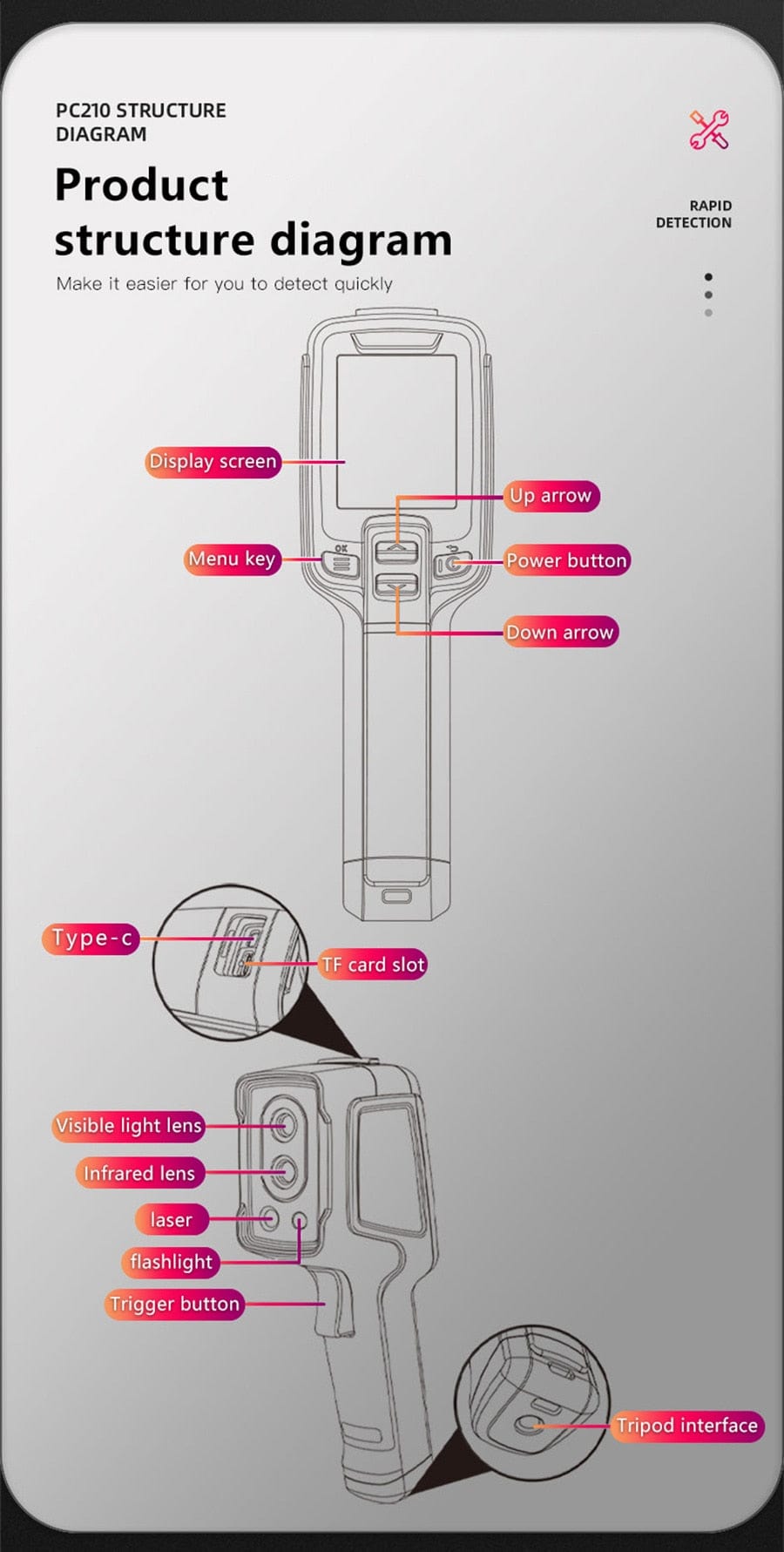
| Interfaces | USB Type-C, TF Card Slot, UNC 1/4-20 Tripod Thread |
| Laser | Class 2, 645 to 655 nm, under 1 mW — target pointer only |
| Battery | Rechargeable Lithium-Ion, Non-Removable |
| Battery Capacity | Not Specified by Supplier |
| Operating Time | 16 Hours or More per Charge, Stated |
| Charging | USB Type-C, 90% of a full charge in 2.5 hours, usable while charging |
| Working Temperature | -15 °C to 50 °C |
| Storage Temperature | -40 °C to 70 °C |
| Ingress Rating | IP54 — Dust Protected & Splash Resistant |
| Drop | Supplier States a 2 m Drop Test |
| Weight | 375 g or Less |
| Size | 194 x 61.5 x 76 mm |
| PC Software | ThermoTools |
| Australian Approval | Not specified by supplier — no certificate sighted, no RCM mark on the unit |
| In the Box | Camera, wrist strap, power adapter, Type-C USB lead, 16 GB TF card, quick start guide, data download card, supplier paperwork |
Payment & Security
Payment Methods
Your payment information is processed securely.
We do not store credit card details or have access to your credit card information.
